
Reviewed · MYKONOS COOKING CLASSES & FARM VISITS
Mykonos Cooking Class of Local Specialties
Want Mykonos beyond beaches?
This Mykonos cooking class gives you hands-on practice with real local dishes and ends with a dinner you made yourself, plus recipe sheets you can use later. The big downside is the price: at $238.28 per person, you’ll want to make sure a guided meal-and-cooking experience fits your budget.
You may be welcomed by Mykonos Farmers host Jorgi, and the cooking lesson can include friendly, steady instruction from chefs such as George or Chef Alex, with Christina often involved in the process. Either way, the vibe is family-style and practical, not showy.
It runs about 3 hours, starting at 4:30 pm in Ornos, and you finish back at the meeting point. It’s set up as a private experience, so the pacing can feel more like a small group dinner lesson than a crowd event.
In This Review
- Key things to know before you cook in Ornos
- Where the class starts: Ornos at 4:30 pm
- Meeting your Mykonian chef and getting cooking-station ready
- Mostra and Tsatziki: the starter that teaches Greek flavor fast
- Mostra
- Tsatziki
- Kremidopita: onion pie that balances sweet, tangy, and creamy
- Keftedakia Mykonou: meatballs with ouzo and a very Mykonian twist
- Greek salad plus wine: the dinner moment you actually wait for
- Rafiolia dessert: fried dough, honey, orange, cinnamon, and sometimes cheese
- Why the chef-led recipes matter for value
- Price and logistics: $238.28 per person, and what you should expect
- Group size, participation, and how the class typically flows
- Who should book this Mykonos cooking class
- Should you book this Mykonos cooking class?
- FAQ
- How long is the Mykonos Cooking Class of Local Specialties?
- Where is the meeting point?
- What time does the class start?
- Is this class private?
- What language is the class offered in?
- Does the class include wine?
- What dishes are included in the menu?
- Can I get a refund if I cancel?
Key things to know before you cook in Ornos
- Private, hands-on cooking time with a local chef guiding you through the classics
- A sample menu that covers starter, main, and dessert so you taste the full range
- Local wine with the feast, paired to the meal you just made
- Recipe handouts in written form so you can recreate dishes after your trip
- You’ll learn technique, not just when to add ingredients
- Not recommended for vegans, since the menu includes dairy and meat
Where the class starts: Ornos at 4:30 pm
This is the kind of cooking class that fits nicely into a Mykonos evening. You meet in Ornos (Ornos 846 00, Greece) and the class begins at 4:30 pm. The whole experience takes about 3 hours, and it ends back at the same meeting point, which keeps things easy when you’re already tired from beach time and sun.
Ornos is a smart choice for a food experience. It’s less like the main-tourist strip feeling you get elsewhere, and more like the everyday island rhythm: dinner soon, ingredients already planned, and people moving with purpose. That matters because you’re not just cooking in a classroom. You’re cooking like it’s dinner at home.
You’ll get a mobile ticket, and you should receive confirmation when you book. The class is offered in English, which makes it feel comfortable if your Greek is limited. And because it’s private, you won’t be stuck guessing around other groups or waiting for your turn.
Roll up your sleeves: more cooking classes and farm tables



Meeting your Mykonian chef and getting cooking-station ready
The class flow is straightforward. Someone meets you at the meeting point and takes you to the place for the lesson. Once there, you’ll work with a renowned Mykonian chef who teaches you local specialties while you cook.
From past experiences in this area, what really sets these classes apart is the tone. You’re not being asked to perform. You’re being taught. The chefs tend to explain why a dish works, not just how to assemble it. That’s where you pick up the kind of skills that carry over when you’re cooking in your own kitchen later.
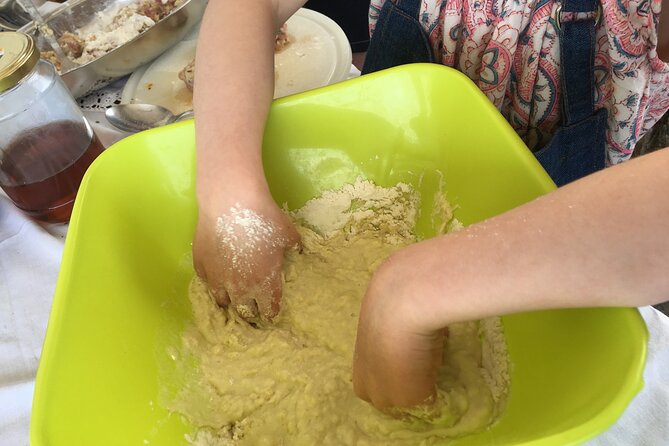
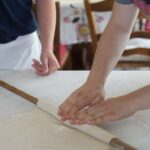
In particular, the cooking style can be a mix of demonstration and hands-on. You might do most steps yourself for key parts, while someone else shows how to handle dough, build layers, or shape the meat mixture. One family-style lesson I’ve seen run this way also included a lot of participation from younger cooks, with the chef keeping teens engaged by giving real jobs at the right moments.
Either way, expect:
- Quick orientation to the station and ingredients
- Clear step-by-step guidance
- Time to cook your own portions of the menu
- A sit-down moment to eat what you made
And yes, this is a dinner event in practice. The class builds toward a meal that feels like a reward, not a snack.
Mostra and Tsatziki: the starter that teaches Greek flavor fast
You’ll start with two classics that show Greek food at its simplest and most satisfying. These are perfect dishes to learn early because they rely on a few high-impact ingredients and technique you can repeat later.
Mostra
Mostra is a bread-spread style starter built around kopanisti, a spicy local cheese. You typically use a rusk or a piece of bread, then build the flavor with tomato, oregano, and extra virgin olive oil.
Why this works as a teaching dish:
- You get to taste the cheese without needing complicated steps.
- Olive oil and oregano show up as the bridge between bold and fresh flavors.
- The tomato adds acidity so the cheese doesn’t feel heavy.
If you like strong flavors, you’ll probably enjoy this part the most. If spicy isn’t your thing, you can ask how hot the cheese is and how to balance it with olive oil.
Tsatziki
Next is tsatziki, made with thick yogurt and drained cucumber, plus olive oil, garlic, mint, lemon juice, and salt. The key technique here is drainage: thick yogurt and well-drained cucumber make the dip creamy instead of watery.
This is the kind of starter that teaches you a repeatable lesson. When you make tsatziki at home, you’ll remember to handle the cucumber first. You’ll also notice how lemon juice and mint give it that clean, cooling edge that keeps Greek dinners from feeling too rich.
And because these dishes are starters, you’ll likely get to taste as you go. It turns the class into a learning meal instead of a waiting game.
More hands-on island classes and craft sessions


Kremidopita: onion pie that balances sweet, tangy, and creamy
The first main dish in your menu is kremidopita, an onion and cheese pie. It’s built around onions, and the flavor is not shy. You’ll get that tangy onion profile, then it’s balanced by creamy local cheese (tirovolia).
Herbs matter here too. The dish is seasoned with dill and other herbs, which keeps the onions from tasting one-note. The result is a pie that feels both comforting and sharp, like it has a conversation going between sweet onions and herby brightness.
This is a good dish to learn if you like baking-style cooking. You’ll probably spend time shaping or assembling depending on the class flow, but the point is clear: you see how local cheese and herbs do the heavy lifting.
Practical tip: when onions are involved, moisture is your enemy. Ask how the chef deals with onion moisture and what signals tell them it’s ready. Even if you never bake this exact pie at home, you’ll take away onion-handling skills.
Keftedakia Mykonou: meatballs with ouzo and a very Mykonian twist
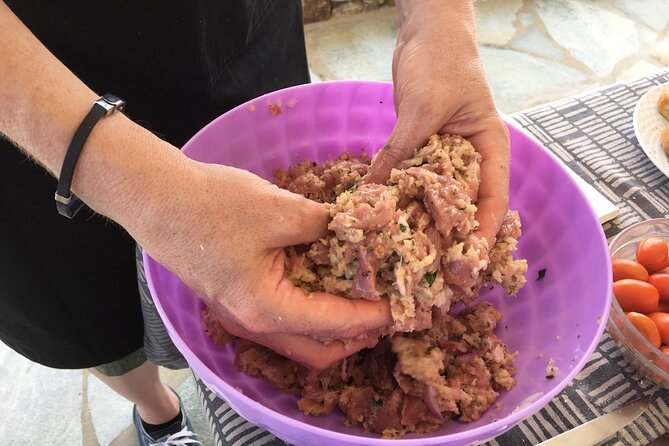
Then comes the second main: Keftedakia Mykonou, pork meatballs (with a note that beef can be used on request). The mixture is hand minced and includes grated onions, bread, eggs, oregano, mint, olive oil, and ouzo.
This dish teaches you something important about Greek cooking: flavor isn’t just about one ingredient. It’s about how several ingredients work together so none of them dominates.
Here’s what stands out in the keftedakia recipe:
- Onions for sweetness and structure
- Bread for texture and moisture
- Eggs for binding
- Oregano and mint for aromatic Greek lift
- Ouzo for that distinctive Greek depth you don’t get from generic meatball recipes
If you’re worried about learning meatball technique, don’t be. The learning moment is usually about forming the mixture and understanding how the chef expects it to feel. Pay attention to texture. When the mixture is right, you’ll feel it.
Also, because this class is set up for real cooking, you’ll probably get a chance to do key steps yourself, not just watch. That’s a big reason it feels worth paying for: you leave knowing what to do next time.
Greek salad plus wine: the dinner moment you actually wait for
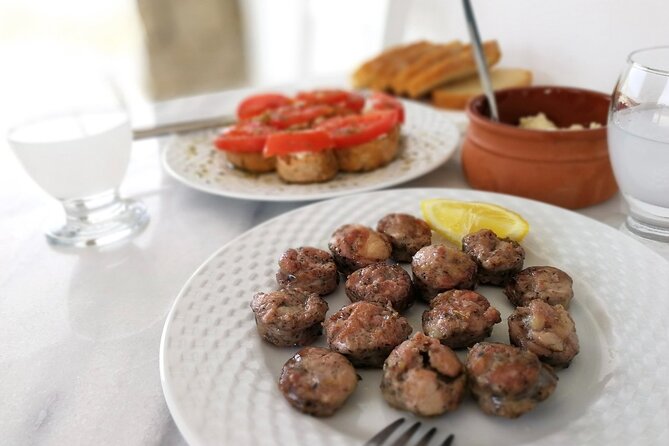
On the table, you’ll also have Greek salad with tomatoes, cucumbers, onions, green bell peppers, feta cheese, oregano, and olive oil. Even though it’s familiar, it’s worth treating as part of the lesson. The flavor balance in Mykonos-style salad is often sharper and more aromatic than the bottled, pre-cut version you might eat back home.
And then there’s the local wine that accompanies the feast. You don’t have to be a wine expert to enjoy this part. The wine is meant to go with the meal you cooked, and it’s a simple way to make the evening feel complete instead of like a cooking workshop that happens to include food.
If you’re planning your schedule, remember this is an evening class. You’ll be eating what you cooked, not just tasting. Build in time to relax after.
Rafiolia dessert: fried dough, honey, orange, cinnamon, and sometimes cheese
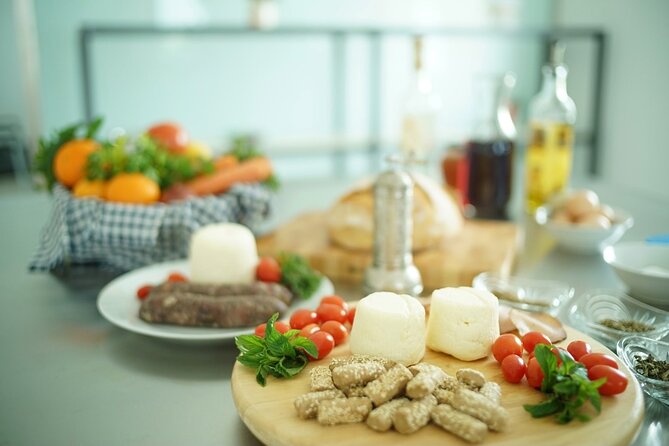
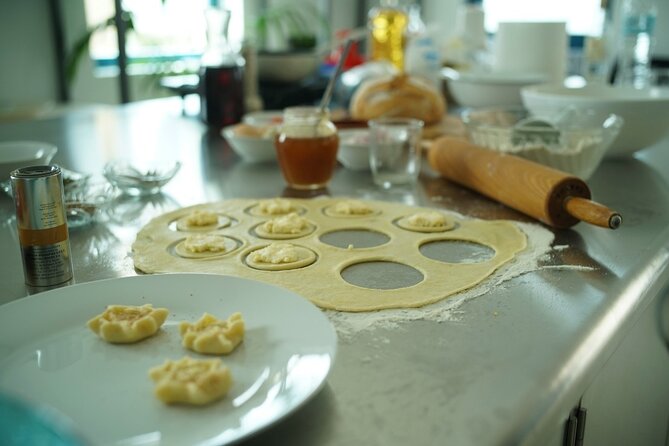
You end with Rafiolia, sweets made of fried dough that may contain tirovolia cheese. They’re sprinkled with honey, orange, and cinnamon.
It’s the kind of dessert that feels like a warm finale. Fried dough gives you crunch and chew. Honey brings stickiness and floral sweetness. Orange and cinnamon add aroma so you get more than sugar on your tongue.
If you’re sensitive to dairy or you don’t love cheese in sweets, note the menu says rafiolia may contain cheese. This is a dessert built on local ingredients, and the chef will guide you on what’s in the version you make.
Either way, it’s a good end to a meal because it’s not trying to be light. It’s trying to be right for a Greek family table.
Why the chef-led recipes matter for value
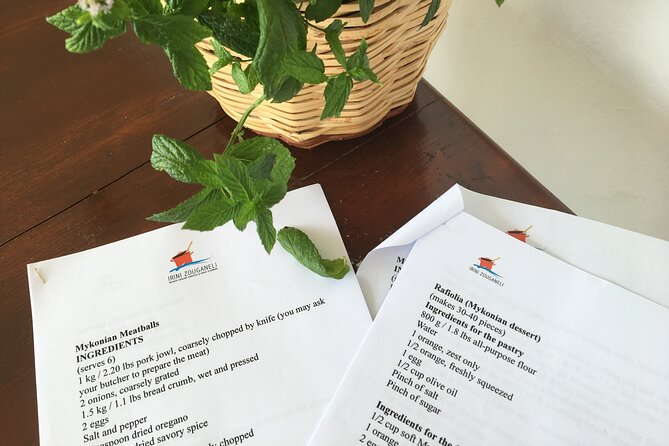
Most cooking classes stop at dinner. This one adds a practical bonus: you receive recipes in written form at the end. That changes the value in a real way, especially for dishes like tsatziki, onion pie, and meatballs where technique and ratios matter.
When you get recipes on paper:
- You can cook again without guessing
- You can compare the chef’s method to your habits
- You can shop smarter at home
You’ll still need to adapt to your local ingredients, but you won’t be starting from scratch.
And for a private experience, that recipe handout usually feels more personal. You’re more likely to remember what the chef corrected while you worked, and then you can adjust when you recreate it later.
Price and logistics: $238.28 per person, and what you should expect
At $238.28 per person, this class isn’t cheap. The price makes sense only if you value three things:
- A private lesson feel with your group cooking together
- A full menu dinner (starter, mains, dessert) plus local wine
- Chef instruction and written recipes you can actually use later
If your goal is simply to eat great Greek food, you could spend less at a good taverna. But if your goal is to learn how to make the dishes your memory will keep thinking about, then the cost starts to look like training, not just dinner.
One fair caution: the experience runs about 3 hours. If you’re the kind of traveler who hates being in one place, this may feel like a lot of scheduled time. If you’re the kind who loves cooking and wants skills you can take home, it’s a strong fit.
Group size, participation, and how the class typically flows
This is labeled as a private tour/activity, so it’s only your group. Private usually means better attention to the way you handle dough, shape meatballs, and get the timing right for the meal.
From examples of how these lessons often run in family kitchens, you can expect some tasks to be more hands-on than others. For instance:
- You’ll likely help with portions of the dough or assembly
- You’ll likely mix or form the meatball mixture
- You’ll likely assemble dips and starters
It may not be a strict 100% hands-on cooking class where everyone does every single step. But it should still give you meaningful participation, not just a seat by the kitchen wall.
If you want a class where everyone cooks constantly, ask what the hands-on portion looks like when you book. The menu is clear; the teaching balance can vary.
Who should book this Mykonos cooking class
This is a great choice if:
- You want authentic Mykonian flavors, not generic Greek cooking
- You like cooking for real, not just watching
- You want an evening that ends with a proper meal and wine
- You care about leaving with the recipes, not just memories
It may be a poor fit if:
- You’re avoiding meat and dairy. The class is not recommended for vegans, and several menu items rely on cheese and yogurt.
- You’re looking for a budget activity. This one is priced like a private, chef-led experience.
It also suits multi-generational travel. One family highlight was how the chef kept teens engaged by giving them meaningful work at the right times. If you’re traveling with a teenager who usually refuses “cultural activities,” this has a good chance of winning them over.
Should you book this Mykonos cooking class?
Book it if you want a hands-on food lesson that ends in a full meal of Mostra, tsatziki, onion pie, keftedakia, Greek salad, and rafiolia, with local wine and a written recipe set you can use later. The price is high, but the structure is built around real teaching and a real dinner, not a quick sampling tour.
Skip it if your priority is low-cost eating or if dietary needs make the menu unrealistic. Also consider your schedule: starting at 4:30 pm means you’ll want a relaxed evening after, not a late-night sprint across the island.
If you’re already planning an afternoon in Mykonos and want one experience that turns ingredients into skills, this is a strong pick.
FAQ
How long is the Mykonos Cooking Class of Local Specialties?
The class lasts about 3 hours.
Where is the meeting point?
The start point is Ornos 846 00, Greece.
What time does the class start?
The start time is 4:30 pm.
Is this class private?
Yes. It’s a private tour/activity, so only your group participates.
What language is the class offered in?
The class is offered in English.
Does the class include wine?
Yes. Local wine accompanies the feast.
What dishes are included in the menu?
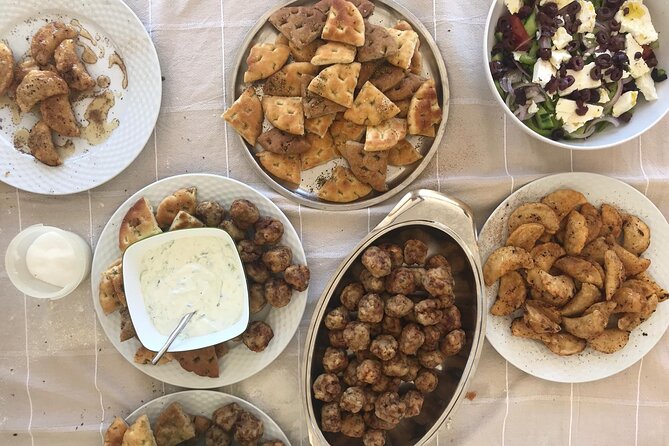
The menu includes Mostra, Tsatziki, Kremidopita, Keftedakia Mykonou, Greek salad, and Rafiolia (fried dough dessert).
Can I get a refund if I cancel?
Yes. Free cancellation is available up to 24 hours in advance for a full refund.
More Mykonos Workshops and Classes
More Cooking Classes and Farm Tables
More Mykonos Tours to Browse





Not quite this one? A handful of other Mykonos trips we have written up










Mykonos Cooking Classes & Farm Visits, compared.
 ★ 4.8Delos and Rhenia Islands Cruise with BBQ MealFrom $152913 reviews
 ★ 4.9Cooking Class with Food and WineFrom $169268 reviews
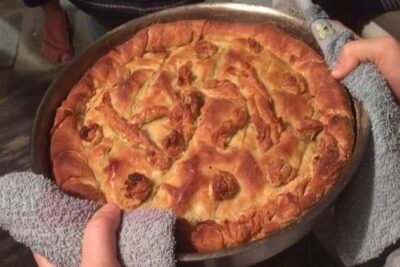 ★ 5.0Cooking Classes in Mykonos GreeceFrom $181180 reviews
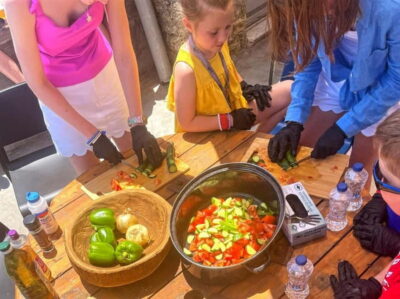 ★ 5.0Group Cooking Class at the Home of a Local FamilyFrom $117166 reviews
 ★ 5.0Souvlaki Cooking Class with Locals – Transfer IncludedFrom $13993 reviews
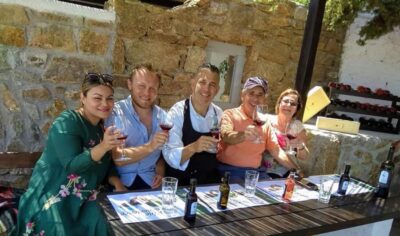 ★ 4.6Wine Tasting at a Mykonian FarmFrom $8879 reviews
 ★ 4.8Delos and Rhenia Cruise with Swim and Greek MealFrom $15964 reviews
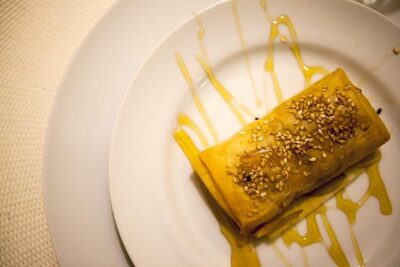 ★ 5.0Mykonos Home Cooking Class & Traditional Greek Meal with AngelinaFrom $32654 reviews
Browse the lists this tour appears in